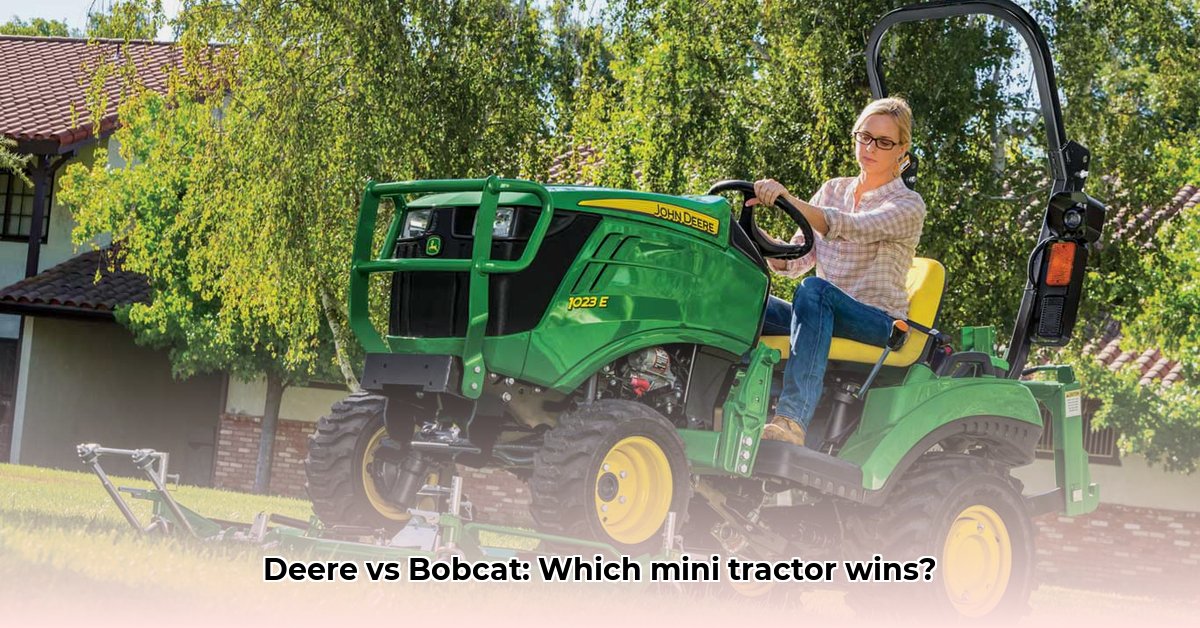
Choosing the right compact tractor can be overwhelming. This comparison analyzes Deere and Bobcat offerings to help you make an informed decision. We'll focus on power, transmission types, attachments, and sustainability, providing a data-driven approach to your purchase. Are you ready to find the perfect fit for your needs and budget? For even more options, check out other brands like New Holland.
Mini Tractor Mower Showdown: Deere vs. Bobcat in 2025
Both Deere and Bobcat offer a variety of compact tractor mowers, each with its own strengths and weaknesses. Understanding these differences is crucial for selecting the best option for your specific needs. Do you prioritize ease of use, raw power, or a balance of both? This analysis will help you answer this crucial question.
Power and Performance: Matching Tractor to Task
Deere typically organizes its tractors by horsepower (HP), simplifying comparisons. Bobcat uses a platform system (e.g., 1000, 2000 series), grouping horsepower with other features like cabs and transmissions—this adds complexity to direct comparisons. For large properties requiring significant power, a higher-horsepower Bobcat may be necessary. However, smaller properties or light landscaping jobs might benefit from a more budget-friendly, lower-horsepower model from Deere. What size is your property, and what tasks will your tractor undertake?
Transmission Types: Hydrostatic vs. Gear
A key difference lies in the transmission type. Many lower-horsepower models from both brands utilize hydrostatic transmissions. These are user-friendly, ideal for maneuvering around obstacles. However, for heavy tasks like plowing or tilling, gear transmissions usually offer superior power and durability. Does effortless control or brute strength take priority in your workload? Your answer will guide your choice of transmission.
Attachments and Versatility: Expanding Functionality
Both brands provide an array of attachments, significantly expanding the tractor's capabilities. From front-end loaders for moving materials to tillers for preparing garden beds, these add-ons increase the tractor's overall value and usefulness. Before purchasing, thoroughly research the available attachments for each model to ensure compatibility with your intended tasks.
Comparing Key Features: Deere vs. Bobcat (20-40 HP Range)
The following table offers a simplified comparison within the 20-40 HP range. Note that specific specifications vary by model.
| Feature | Deere (20-40 HP) | Bobcat (20-40 HP) |
|---|---|---|
| Typical Transmission | Hydrostatic, Gear | Hydrostatic, Gear |
| Cab Options | Mostly open, some cabs | Open and enclosed cabs |
| Lift Capacity | Varies by model | Varies by model |
| Price Range | Varies by model | Varies by model |
Making Your Choice: Prioritize Your Needs
What are your priorities? Maneuverability in tight spaces? Heavy-duty lifting capacity? Ease of operation for novices? Your answers significantly influence the final decision. Deere generally prioritizes ease of use and smaller models, while Bobcat offers a broader range, including powerful options. What are your must-have features?
Future Needs and Sustainability Considerations
Consider your future needs. Will your property size or tasks change? A versatile machine that adapts to evolving demands represents a smarter long-term investment. While neither brand strongly emphasizes eco-friendliness, it's worth researching any available environmentally conscious features. What is the long-term vision for the tractor's use?
Potential Problems and Safety Precautions
Regular maintenance and proper training are paramount for minimizing risks. Think of routine maintenance as essential for both longevity and safe operation. What safety measures will you put in place?
Legal Compliance: Meeting Emissions Standards
Ensure your chosen model meets all applicable emissions standards and local regulations before purchase.
The Bottom Line: The Right Tractor for You
Ultimately, the best compact tractor depends on your individual needs and budget. Careful comparison and potentially test-driving several models are recommended before making a final decision. There is no single "best"— instead, the optimal choice perfectly suits your unique requirements and work environment.
How to Choose a Sustainable Compact Tractor for Small Farms
Key Takeaways:
- Compact tractors enhance small-farm efficiency.
- Fuel efficiency and low emissions improve sustainability.
- Versatile attachments are essential for multi-purpose operation.
- Research maintenance costs before purchasing.
- Tractor suitability depends on farm size, crops, and budget.
- Consider the impact of compact vs. mid-size tractors on implement compatibility.
Deere vs. Bobcat: Sustainable Small Farm Considerations
Choosing between Deere and Bobcat requires a careful assessment of your specific needs. These factors can help guide your decision:
- Fuel Efficiency: Lower fuel consumption reduces operating costs and your environmental impact. Consider both diesel and gasoline engine options.
- Emissions: Prioritize low-emission models complying with all relevant standards.
- Durability: A durable tractor minimizes replacements and waste.
- Versatility: Multi-purpose tractors utilizing various attachments maximize usage and avoid multiple equipment purchases.
- Maintenance: Simple maintenance procedures and readily accessible parts contribute to responsible ownership.
Deere and Bobcat Compact Tractor Comparison for Small Farms
This comparison highlights practical considerations. The perfect tractor will ultimately depend on your individual needs and budget.
| Feature | Deere | Bobcat | Considerations |
|---|---|---|---|
| Engine Options | Wide range of diesel and gasoline | Primarily diesel | Diesel often offers better fuel economy and torque, but gasoline is cheaper. |
| Horsepower Range | Varies widely across models | Varies, usually lower maximum HP | Match horsepower to your farm's needs; avoid overspending on unnecessary power. |
| Attachments | Extensive selection | Good selection, possibly less diverse | Consider which attachments are critical for your operations. |
| Maintenance | Generally good service network | Generally good service network | Proximity to authorized service centers is crucial. |
| Price | Varies widely | Varies widely | Balance cost with necessary features and long-term value. |
Note: Specific models and specifications vary. Check manufacturer websites and local dealers for the most up-to-date information.
Choosing Your Sustainable Compact Tractor: A Step-by-Step Guide
- Assess your farming needs: What are your main tasks? How large is your farm? What crops do you grow?
- Establish your budget: Compact tractors have a wide price range. A clear budget helps narrow your search.
- Research models in detail: Compare models, especially fuel efficiency, emissions, durability, versatility, and maintenance requirements. Consult online resources and talk to other farmers.
- Test drive if possible: Hands-on experience helps determine the tractor's operation and ease of use.
- Calculate long-term costs: Include fuel, maintenance, and repairs in your overall cost analysis.
By carefully following these steps and using this comparison, you can choose a compact tractor that supports your sustainable farming practices effectively for years to come.